How the Right Storage Can Elevate the Campus Experience

Smart Solutions That Make Space Work Harder—for the People Who Use It Every Day

POV: You’re the Director of Facilities. Summer’s Here, and Fall Is Coming Fast—Is Your Campus Storage Ready?

Finals are wrapping up, the quad’s starting to quiet down, and your team is already shifting gears—from end-of-year chaos to summer planning mode. You’ve got projects to prioritize, budgets to stretch, and departments all asking for more space.

Here’s the truth: students aren’t just showing up with backpacks anymore. They’re coming with big expectations—and more programming, more gear, and more support needs to match. Meanwhile, most campuses are working with the same square footage they’ve had for years.

So what gives?

We talk a lot about designing for student success. But the spaces we build—or don’t—have just as much to do with it. And sometimes, the fastest way to make room for what’s next isn’t by building new… it’s by rethinking how we use what we already have.

This guide walks you through how smart storage can unlock value, reduce clutter, and support the kind of campus experience students remember for all the right reasons.
1. Your Library Can Do It All—If the Space is Flexible Enough

Today’s library isn’t just about books. It’s a study zone, a social hub, a tech space, a resource center, and often, a 24/7 refuge for students juggling classes, jobs, and life.

So how do you fit all of that into the same footprint?

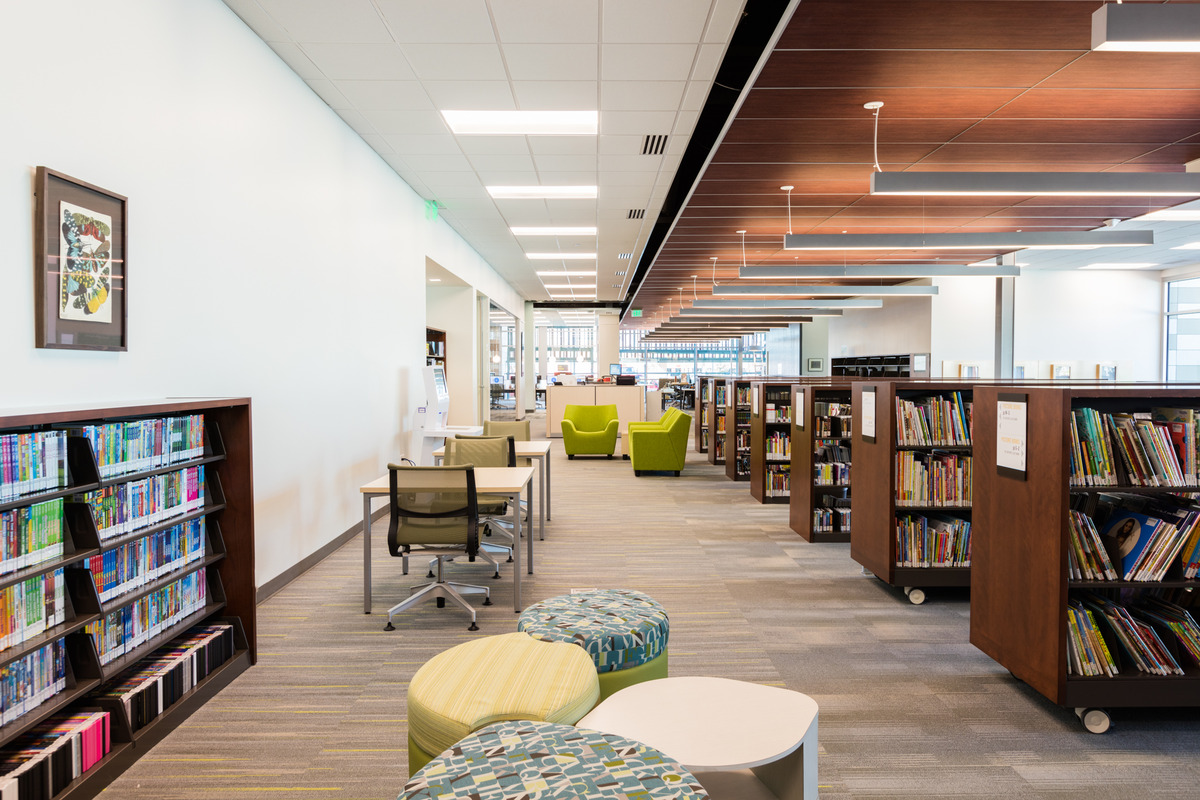
  • High-density shelving is the behind-the-scenes solution that keeps collections onsite without crowding out the rest. You can double your storage capacity—or cut it in half to create new student-focused spaces—without touching your building’s footprint.
  • Rolling stacks move aside for events, pop-ups, or group work.  
  • Day-use lockers give students freedom to move, collaborate, and settle in—without dragging their stuff from one corner to the next. It’s a small addition that builds a more welcoming, community-centered library experience.

By implementing these, you’re creating a space where students can stay—not just drop in. You’re not just future-proofing your library. You’re building something that adapts right along with your students.

2. Athletic Storage That Works as Hard as Your Teams Do

Athletics departments juggle a lot: gear for every sport, constant turnover, and the pressure to keep athletes safe, equipped, and game-ready. And equipment managers are miracle workers—if they’ve got the right setup.

That’s where mobile systems come in.

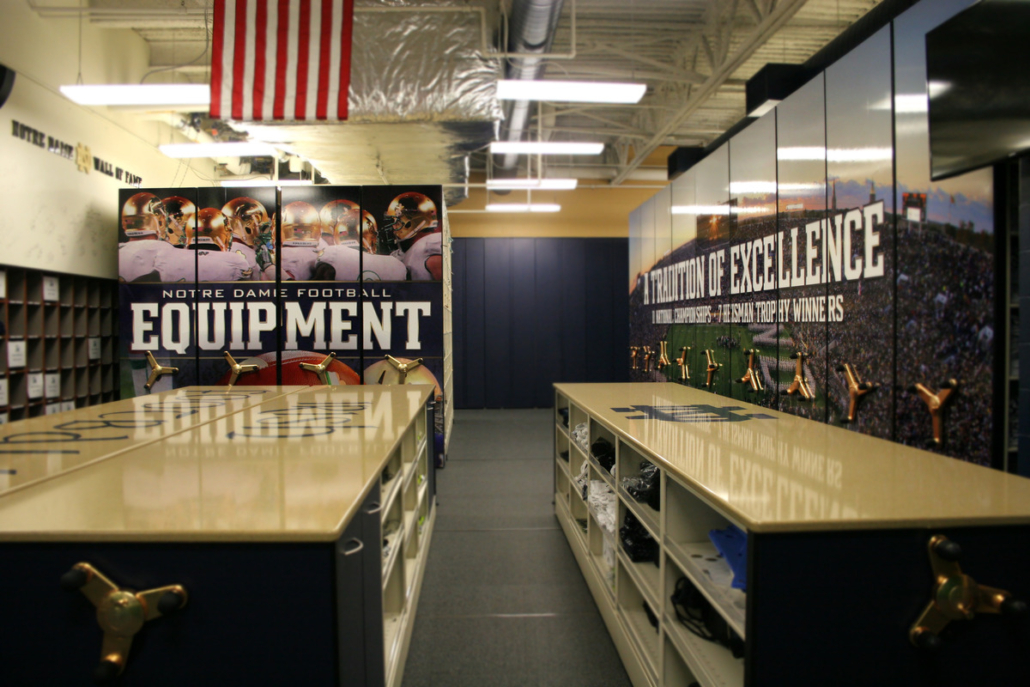
  • Sport-specific accessories can keep equipment organized by season, team, or position, so staff can move fast, stay efficient, and get athletes what they need without second-guessing. It’s precision storage that keeps the whole program running smoother.
  • Branded panels turn storage into a statement, showing off team identity, school pride, and a polished, professional look that gets noticed. It’s not just gear behind those panels—it’s the culture you’re building.
  • Counter-height sections built right into your storage system give equipment managers a central, functional workspace without crowding the room. Everything they need, right where they need it.

Your storage can do more than hold gear—it can be a pride point for the team, a smoother workflow for staff, and a talking point on every recruiting tour. For smaller programs, you can consider consolidating multiple teams’ gear in one system, with room to grow.
Private Phone Booth and Pods for College/University Campus and Library

Nesting Flip-Top Tables for College/University Campus Classrooms

3. Flexible Spaces Should Actually Feel Flexible

You’ve got a room that serves three functions, five groups using it every week, and no storage plan. Sound familiar?

Whether it’s a student store, a design lab, or a community room that does a bit of everything, the right solutions can turn that flex space into a real campus asset.

  • Movable walls mounted on a floor rail system give you the power to reconfigure rooms in minutes—not days. Whether it’s splitting a large space into focused breakout zones or opening it back up for events, these walls flex with your needs on the fly. No contractors. No hassle. Just smart, scalable space on demand.
  • Adaptable storage makes it easy to store what’s needed—then shift, move, or reconfigure as programming evolves. It’s the difference between a room that just looks flexible and one that actually functions that way. 

When you don’t know what tomorrow’s programming will look like, building in flexibility now means fewer headaches later. Don’t just plan for today’s use case—set the space up to evolve.

4. Classrooms That Match the Way Students Learn Now

Active learning is here to stay. But collaborative, tech-forward classrooms take up more space per student than the old lecture hall model.

Storage helps you reclaim square footage and keep learning tools at your fingertips.

  • Ventilated shelving in STEM labs protect sensitive chemicals and equipment by improving airflow and reducing risk, all while keeping materials clearly visible and securely stored. It’s lab storage that thinks like a scientist: smart, safe, and built to perform.
  • Lockers with charging stations in high-traffic academic buildings give students what they value most: convenience. A place to stash gear, charge devices, and move through their day hands-free. It’s a small feature that speaks volumes about how much the campus understands—and supports—student life.
  • Mobile storage systems in underutilized areas turn those overlooked corners into high-capacity storage that flexes with your needs. Whether it’s housing class supplies, tech, or student projects, these systems reclaim space without the need for renovation.

You don’t have to build new wings—you just have to make space work harder.
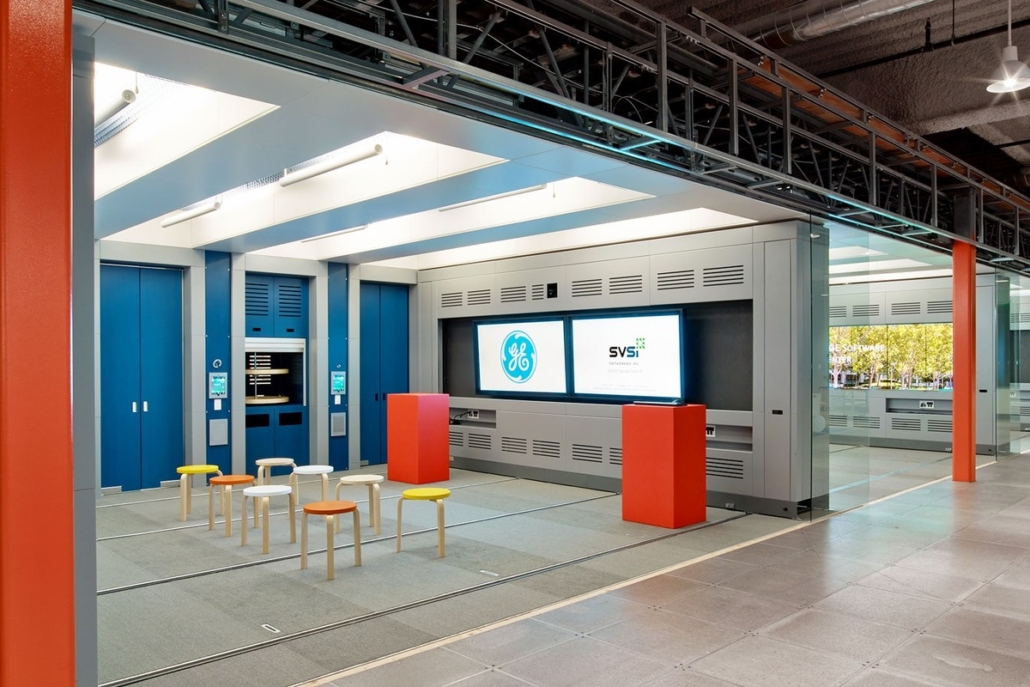
Presentation Lectern for College/University Campus Classrooms

Nesting Flip-Top Tables for College/University Campus Classrooms

5. Turn “No Room for That” Into “Let’s Make It Happen” for Archive Collections

Archives and special collections are growing. Visitors want access. Faculty want storage. Everyone wants preservation. And nobody has the room.

But that doesn’t mean it’s time to cut corners—or cut collections.

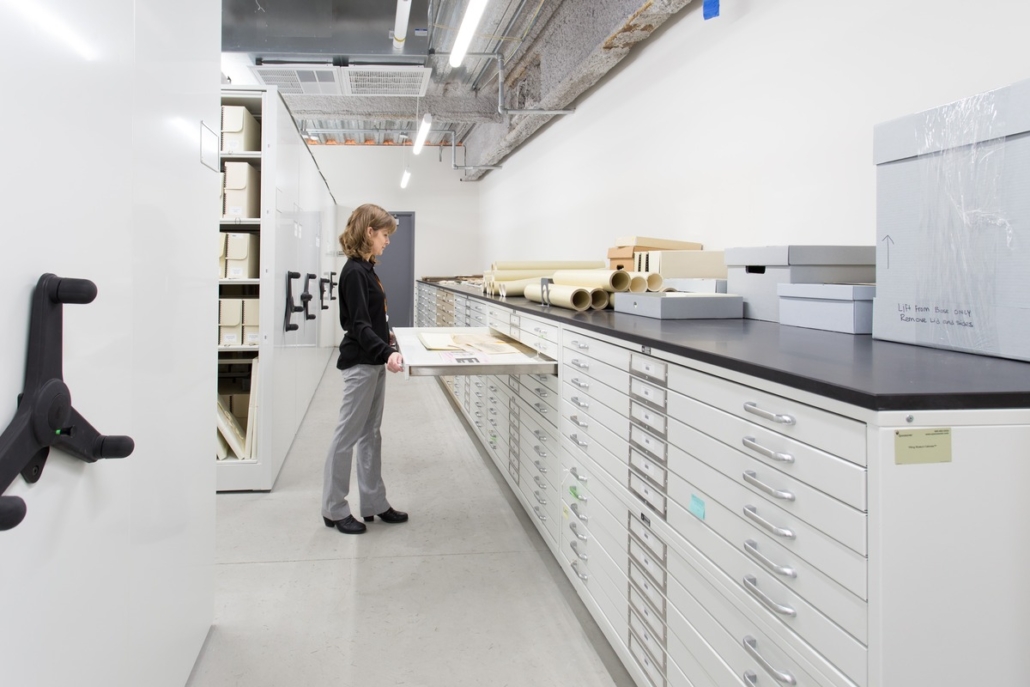
  • Climate-controlled mobile storage protect delicate archives, artwork, and rare findings by maintaining stable conditions and reducing the footprint needed for long-term storage. It’s the gold standard for preservation without expansion.
  • Museum-grade shelving secures rare books, artifacts, and fragile pieces while putting them on view for students, faculty, and guests. When storage doubles as display, you don’t just protect your assets—you turn them into an experience.
  • Art racks keep collections organized, protected, and ready to showcase. They save space, prevent damage, and make rotating exhibits or student access effortless. Because the right storage makes great work easier to share. 

Whether it’s an art display or a rare book collection, the right storage setup protects your investment and extends your space.

6. Performing Arts Deserve Better Than a Cramped Closet

Behind every costume change or curtain call is… a scramble for space. Music stands, props, sheet music, instruments—performing arts programs have unique needs that often get overlooked.

Custom-configured high-density storage can keep things protected, accessible, and ready when it’s showtime.

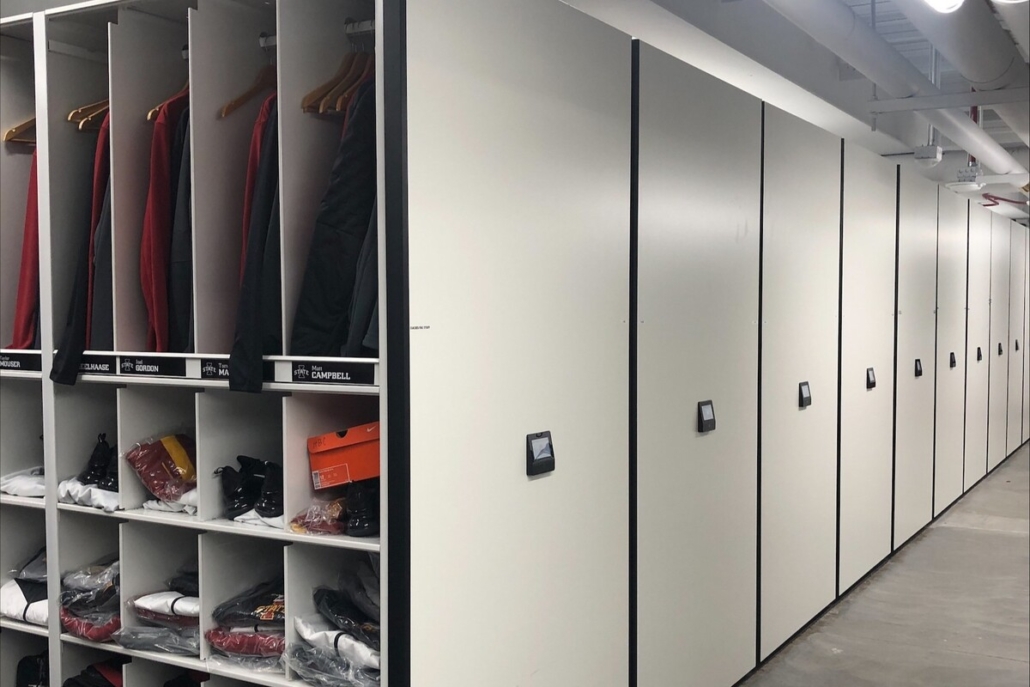
  • Hanging rods integrated into high-density systems keep them wrinkle-free, easy to find, and protected from damage. It’s backstage storage that performs as well as the cast.
  • Mobile shelving with custom compartments keep instruments and sheet music accessible, organized, and safe between rehearsals. No more digging, no more damaged pieces—just everything in its place, ready for curtain call.

No more wasted minutes. No more missing gear. Just room to perform at their best.

Nesting Flip-Top Tables for College/University Campus Classrooms

Nesting Flip-Top Tables for College/University Campus Classrooms

7. Rec Centers That Run Smoothly Behind the Scenes

Recreational sports, fitness classes, wellness services—they’re a big part of the student experience. But if your staff is digging through piles of gear or struggling to track inventory, it’s time for a better setup.

  • High-density shelving lets your team see what they have, check gear in and out fast, and focus on the people they’re there to serve.

A well-organized rec center isn’t just efficient—it’s a campus highlight that impresses prospective students and keeps current ones engaged, active, and coming back.

8. Campus Police Need Systems They Can Trust

Campus safety teams may be small, but their responsibilities aren’t. Tactical gear, changing equipment needs, and secure evidence storage all require space that works as hard as they do.

  • Adaptable lockers grow with department needs, giving officers secure, personalized storage that evolves without the need for costly upgrades.
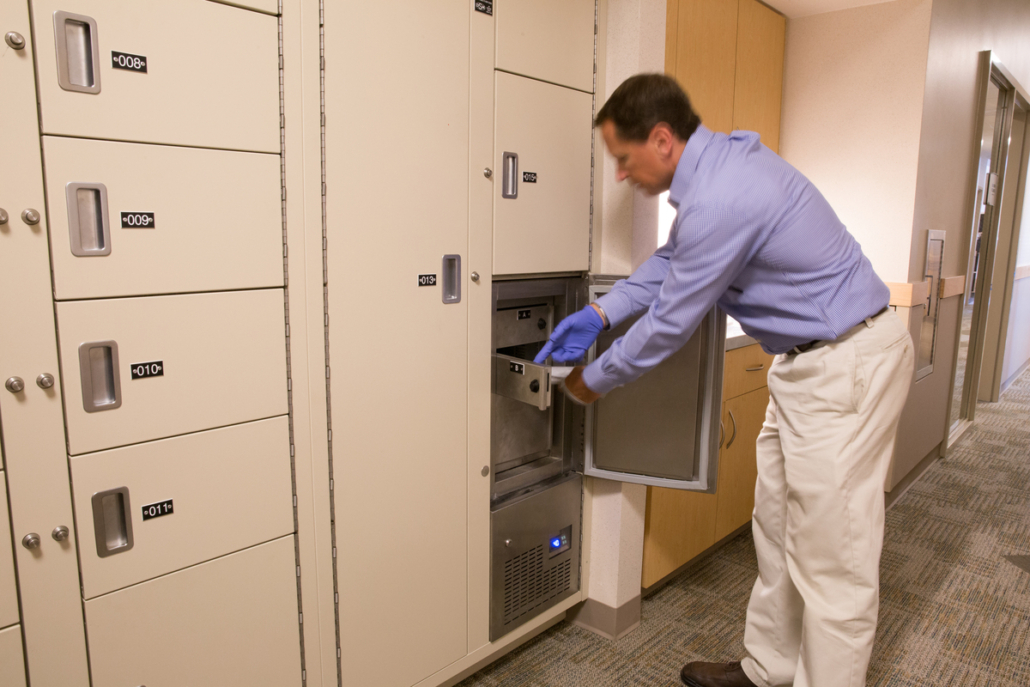
  • Chain-of-custody evidence systems ensure secure transfers, controlled access, and proper documentation from intake to storage. It’s a simple system that builds confidence, protects integrity, and upholds professional standards.

When campus police departments are equipped with secure, purpose-built storage, they work more efficiently, respond faster, and build greater trust with the communities they serve—contributing to a safer, more supported campus experience for everyone.
Nesting Flip-Top Tables for College/University Campus Classrooms

Nesting Flip-Top Tables for College/University Campus Classrooms

9. Student Health Is Growing—and So Are Storage Needs

Mental health services. Walk-in care. Preventative screenings. University clinics are doing more than ever, for more students than ever.

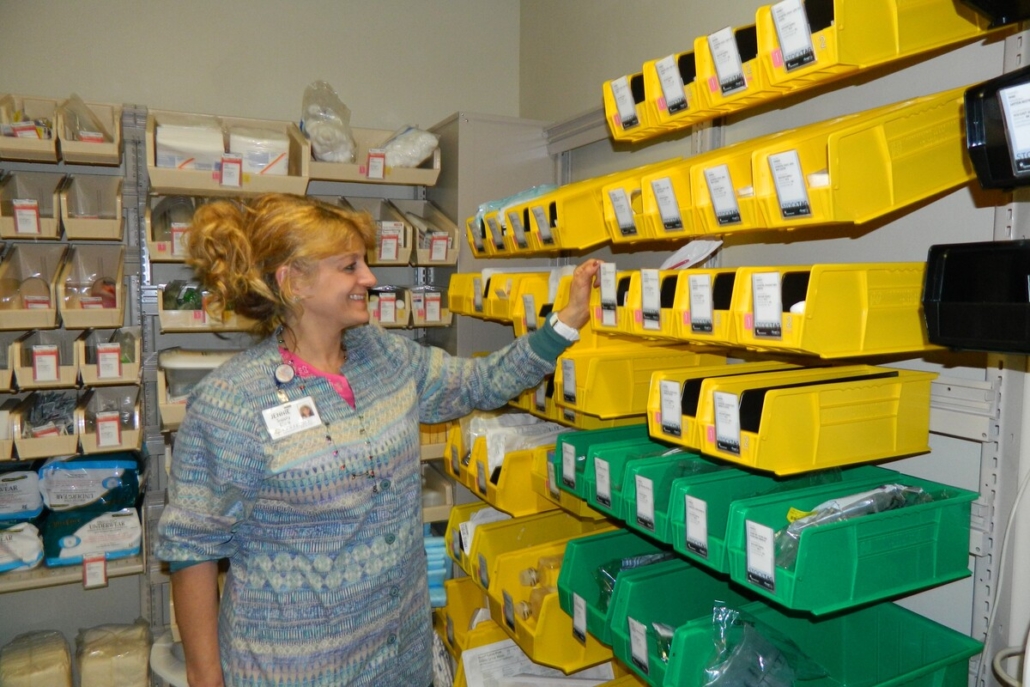
  • Quick-access sterile supply storage designed for quick access of supplies, surgical kits, pharmacy stock, and teaching tools make the most of tight spaces while helping teams deliver care faster and more efficiently.
  • Personal lockers in exam rooms offer secure, temporary storage so students can focus fully on their care, not their belongings.

The right systems make care feel more personal, efficient, and secure. When students feel supported, they stick around—and thrive.

10. Your Facilities Team Is the Backbone of Campus. Give Them Room to Operate.

Spare furniture, light bulbs, fixtures, tools, seasonal signage… you name it, facility managers and maintenance teams store it. But cramming it all into a back room doesn’t help anyone.

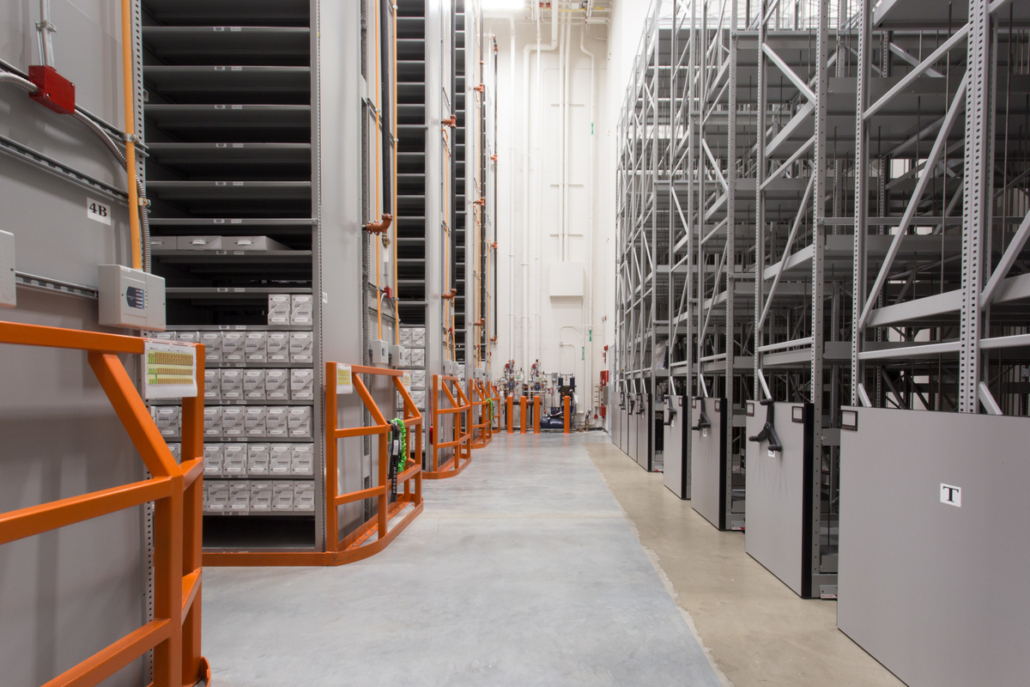
  • Heavy-duty storage systems built for weight and durability keep operations clean, organized, and accessible. And when big projects hit, your team can actually find what they need. 

Facilities and maintenance teams are the engine behind every smooth-running campus. When they have organized, durable storage built for the volume and weight of what they manage, they can respond faster, reduce downtime, and keep every building running at its best.
Nesting Flip-Top Tables for College/University Campus Classrooms

Storage Might Be Behind the Scenes. But It Shouldn’t Be an Afterthought.

Your campus is already doing big things. You’ve got vision. You’ve got momentum. But the day-to-day grind? That’s where space—or the lack of it—can hold everything back.

Reimagine what’s possible with storage that adapts, protects, and delivers long-term value. Because when students feel supported, when staff can work efficiently, and when space helps you grow—not stall—campus life gets better for everyone.

Want to see what this could look like on your campus?

We’re here to help you map it out.
Let’s build smarter, together.

Contact our team of storage experts to request a tailored assessment for your campus.