
You can design the most stunning conference room in the building—but if no one uses it, it’s just expensive square footage.
It’s a common story: a company invests in new furniture, fresh paint, and technology that promises better collaboration… and then meetings still happen everywhere except the dedicated meeting zone.
Every decision you make—from the type of chairs to the add-ons—sends a signal. It tells your team how to show up, how to collaborate, and even how long to stay.
At Systemcenter, we help organizations bring their vision to life—designing spaces that do the talking. Spaces that invite collaboration, inspire productivity, and support teams with purpose.
So before you choose what goes into your conference room or collaborative area, start with these essential questions:
Where will this space live—at the center of the action or tucked away?
Will it be open and flexible, or enclosed for privacy?
Are meetings quick and spontaneous or structured and strategic?
Who’s using it—and what do they need to accomplish there?
Here’s how to confidently design a space that supports your team’s rhythm—and how to determine which type of collaborative environment fits best.
This is the space for teams whose office time is short but purposeful. They’re the self-managed producers: fast, efficient, and always in motion—stepping in to catch up on emails, sync with their team, and head back into the field. They don’t have time for setup or scheduling; they need to collaborate and move on.
The Hybrid Hub is made for that pace. It’s a place to work and collaborate, designed for adaptability without slowing anyone down.
This Type of Space Includes
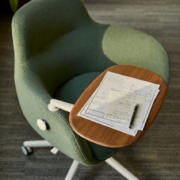
Seating with Casters & Tablet Arms
Purpose: Allows quick reconfiguration when switching from individual work to team huddles.
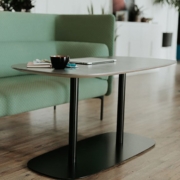
Small Laptop Tables
Purpose: Supports computer work and note-taking without needing a traditional workstation.
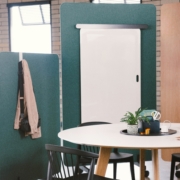
Movable White Boards
Purpose: Allows mobility during team huddles and can be moved out of the way when needed.
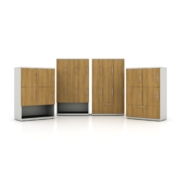
Dedicated Area for Personal Items
Purpose: Keeps belongings out of the way for those who move in and out throughout the day.
Where to place: In centralized areas near free address workstations, ideally near the entrance for quick drop-ins.
Who it’s ideal for: Hybrid teams, sales teams, crisis-management teams, and project managers balancing in-office work with field time.
This is the environment for leaders who have to look at every detail with a magnified lens—examining circumstances, weighing opportunities, and making choices that affect the entire organization or the people they serve. It’s a space that supports focus, clarity, and the ability to think big without distraction in order to make informed decisions.
This Type of Space Includes
Ergonomic Task Seating
Purpose: Added comfort and adjustable support for meetings that may go longer than expected.

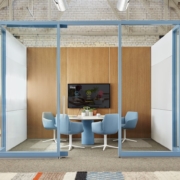
Glass Walls with Doors that can be Locked
Purpose: Ensures privacy for confidential or strategic discussions.
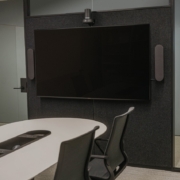
Presentation Screens
Purpose: For reviewing slide decks or connecting with virtual participants.
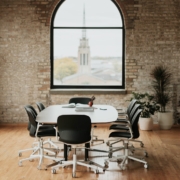
Conference Tables with Integrated Power
Purpose: Keeps laptops and devices charged throughout long sessions.
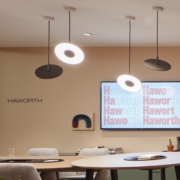
Adjustable Lighting
Purpose: Enhances visual comfort and supports presentations with dimmable settings.
Where to place: Near executive private offices or within leadership zones.
Who it’s ideal for: Law offices, leadership teams, HR departments, and boards or stakeholder groups managing major initiatives.
This space is made for high-performing, imaginative teams who bounce ideas off each other, visualize solutions, and bring projects to life. They’re driven, innovative, and fueled by collaboration. These teams need an environment that can keep up with their dynamic—and the amount of coffee they had that morning.
This Type of Space Includes
Movable Tack Boards & White Boards
Purpose: To map out thoughts, display visuals, and allow teams to tangibly conceptualize their ideas.
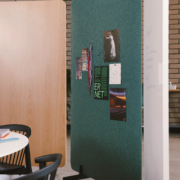
Tables with Integrated Power
Purpose: For spontaneous sessions that can run longer than planned and because the best ideas tend to strike when your laptop is at 3%.
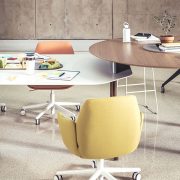
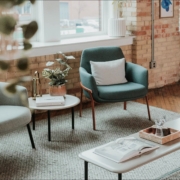
Variety of Seating Options & Table Heights
Purpose: To match the day’s creative energy and let ideas flow at their preferred posture.
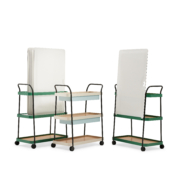
Mobile Carts
Purpose: To store materials and ideas or swap out mood boards without erasing ongoing work.
Where to place: Either in an enclosed area for acoustic control or centrally within the team’s department for easy access.
Who it’s ideal for: Marketing departments, design studios, advertising agencies, and event planning teams.
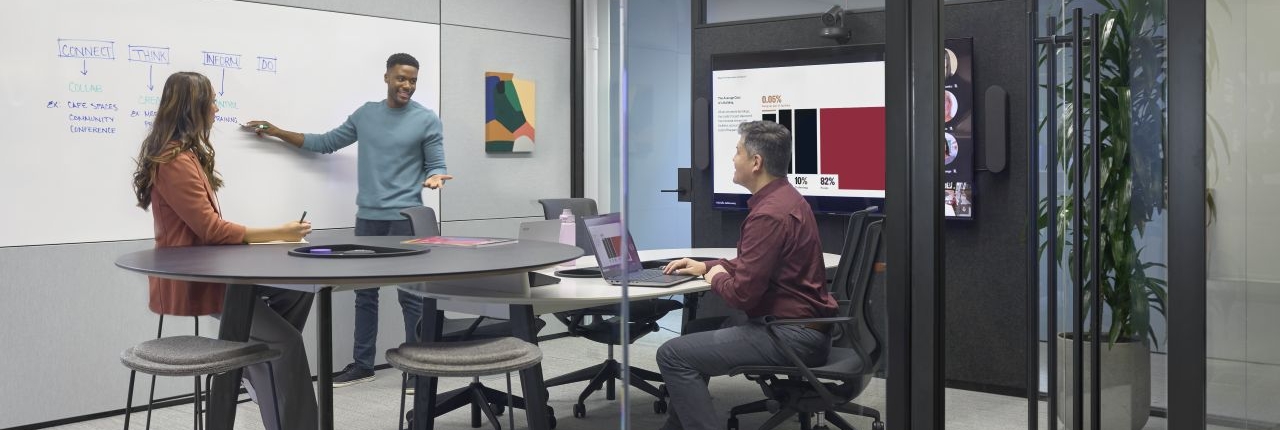
Bringing It All Together
The best collaboration spaces aren’t chosen for aesthetics alone—they’re chosen for alignment.
When your environment reflects the way your team truly works, it becomes a seamless extension of their process.
Every meeting, brainstorm, and breakthrough starts with the right foundation—and that begins with the right space.
So before you plan your next conference room or collaborative zone, ask yourself:
What kind of work do we want to empower here?
When the answer is clear, the design follows naturally.
Because every team collaborates differently—let’s find what works for yours, so brainstorms happen in the right zone, not in the hallway or over someone’s monitor.
Contact Systemcenter today to connect with one of our space consultants and discover the right collaborative zone for your team.
 |
 |